
India’s east coast has faced two successive cyclonic storms within a short period, placing disaster preparedness and recovery systems under renewed scrutiny.
Very Severe Cyclonic Storm Arnab crossed the Andhra Pradesh coast on October 28, 2026. Within days, Severe Cyclonic Storm Murasu developed over the Bay of Bengal and affected the region before moving inland.
The sequence raises an important question: can coastal communities recover from one cyclone while remaining prepared for another?
The challenge extends beyond forecasting and evacuation. It also involves restoring essential services, protecting livelihoods and maintaining emergency response capacity during repeated weather threats.
Cyclone Arnab: A Test of Andhra Pradesh’s Preparedness
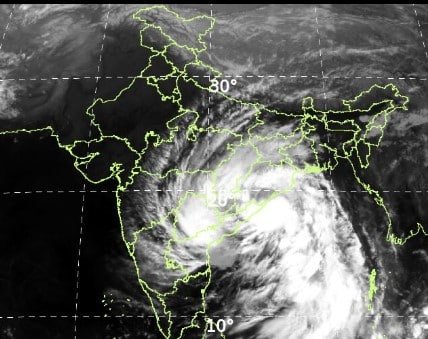
Cyclone Arnab made landfall along the Andhra Pradesh coast on October 28 as a Very Severe Cyclonic Storm.
The Andhra Pradesh State Disaster Management Authority (APSDMA) records the landfall in Konaseema district, with the storm reaching Very Severe Cyclonic Storm intensity during its lifecycle.
The response involved weather monitoring, public warnings, evacuation arrangements and disaster-management operations.
However, the impact extended beyond the immediate landfall.
According to APSDMA’s provisional departmental damage returns, 4,891 houses and 3,046 huts were reported damaged. Agricultural departments also reported approximately 3.52 lakh hectares of crop area inundated.
These figures represent provisional administrative returns, not independently verified final damage assessments. They nevertheless illustrate the scale of the recovery challenge.
Cyclone Murasu: Another Storm Within Days
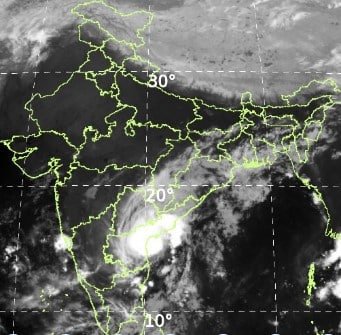
Before recovery from Arnab was complete, another system developed over the Bay of Bengal.The IMD tracked the system as it intensified into Cyclonic Storm Murasu. It subsequently reached Severe Cyclonic Storm intensity.
The storm affected Andhra Pradesh and adjoining areas during November 2–3.By November 4, the IMD reported that Murasu’s remnant depression had weakened into a well-marked low-pressure area over east Telangana and adjoining coastal Andhra Pradesh.
The associated cyclonic circulation extended up to 5.8 km above mean sea level.This weakening marked a reduction in the system’s intensity, but it did not automatically eliminate rainfall-related risks.
The sequence of Arnab and Murasu highlights the importance of maintaining preparedness even after the immediate threat from a cyclone has passed.
India’s Cyclone Preparedness: What Has Improved?
India has strengthened its cyclone monitoring and disaster-response infrastructure over recent decades.Several systems now support coastal preparedness.
1. Weather monitoring and early warnings
The IMD uses satellite observations, Doppler weather radars and numerical weather prediction models to monitor developing weather systems.These tools help meteorologists assess storm movement, intensity and potential impacts.
2. Evacuation shelters and local preparedness
Cyclone shelters and designated relief centres provide safer accommodation for residents in vulnerable coastal areas.Their effectiveness depends on accessibility, maintenance, adequate supplies and timely evacuation decisions.
3. Disaster-response teams
The National Disaster Response Force and State Disaster Response Forces support rescue operations, evacuations and emergency response.Coordination between district administrations, police, health services and local authorities remains essential.
4. Satellite-based monitoring
ISRO satellite observations provide valuable information about cloud patterns, storm development and changing atmospheric conditions.Combined with ground-based observations, these systems strengthen weather monitoring and situational awareness.
The Bigger Challenge: Recovery Between Successive Storms
Back-to-back cyclones create additional pressure on communities and disaster-management agencies.After an initial storm, households may face damaged roofs, disrupted electricity, unsafe drinking water and agricultural losses.Roads and communication infrastructure may also require repairs.
If another severe system arrives before restoration is complete, these existing vulnerabilities can increase.The challenge is therefore not limited to emergency response. Authorities must also maintain sufficient resources for recovery while preparing for further weather threats.
Agriculture deserves particular attention. Prolonged waterlogging, damaged crops and disrupted transport can affect farmers well after cyclone winds weaken.
What Coastal Communities Should Do
Residents in vulnerable coastal districts should continue following official guidance even after a cyclone weakens.
- Monitor IMD forecasts and district administration announcements.
- Keep essential medicines, drinking water, food and important documents accessible.
- Avoid flooded roads, damaged bridges and areas with fallen electrical lines.
- Stay away from beaches and restricted coastal areas during dangerous conditions.
- Follow evacuation instructions issued by local authorities.
- Report damaged infrastructure and emerging hazards to the relevant authorities.
People should not assume that a weakening cyclone means all associated risks have ended.
Frequently Asked Questions
Why are back-to-back cyclones difficult to manage?
Successive storms can leave little time to repair infrastructure, replenish relief supplies and restore essential services. They can also increase pressure on emergency personnel.
Does a weakened cyclone still pose risks?
Yes. Heavy rainfall, flooding, waterlogging and damaged infrastructure can continue posing risks after a cyclone weakens.
Which agency issues official cyclone warnings in India?
The India Meteorological Department is India’s official agency for cyclone forecasts and warnings. State and district disaster-management authorities coordinate local response measures.
What is the biggest preparedness challenge after two cyclones?
The priority is to restore essential services, support affected communities and maintain readiness for additional weather threats.
WeatherWatch Analysis
Cyclones Arnab and Murasu provide an important opportunity to examine India’s east coast disaster preparedness.
India has strengthened its forecasting, warning and evacuation capabilities. However, successive storms highlight another critical aspect of resilience: the ability to recover while maintaining readiness for the next emergency.
Effective cyclone preparedness must extend beyond landfall. It must include resilient infrastructure, accessible shelters, reliable communication, agricultural recovery and sustained support for vulnerable communities.
WeatherWatch is an independent weather news and analysis platform. This article is for informational and educational purposes. It does not replace official IMD warnings or government emergency instructions.