
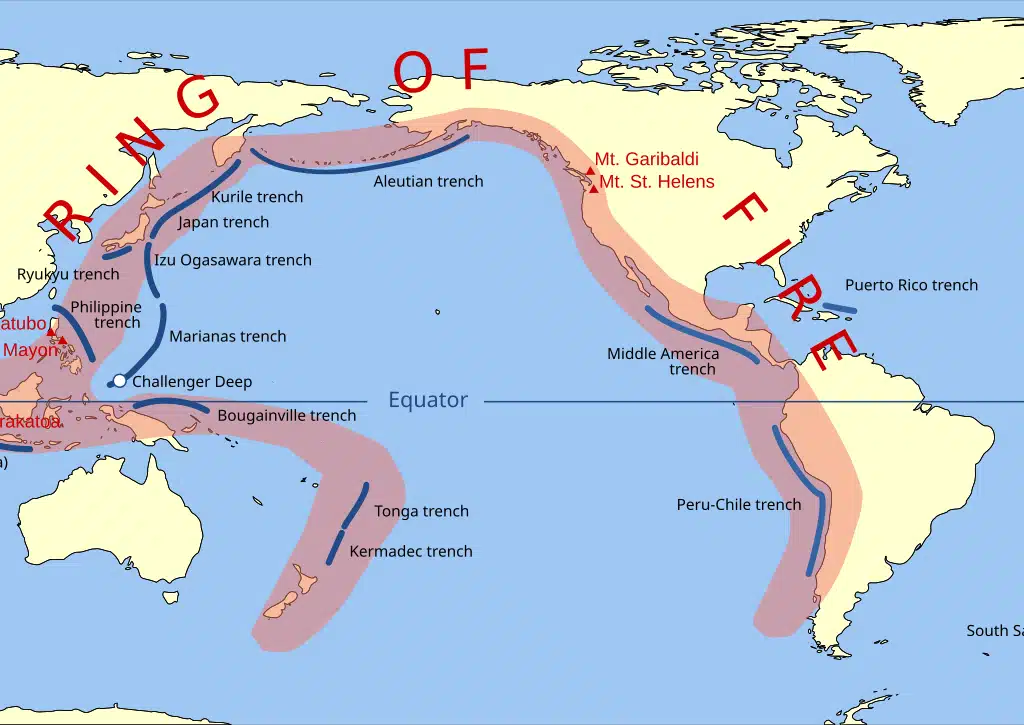
The 8.8-magnitude earthquake off the Kamchatka Peninsula, which triggered a tsunami, exemplifies the Ring of Fire’s seismic activity. 90% of the 34,000 miles (55,000 kilometers) of subduction plate boundaries on Earth are found in the Pacific Ocean region. (Image credit: PeterHermesFurian/Getty Images)
The Earth shook once again in Kamchatka—a remote, rugged peninsula in Russia’s Far East—reminding us, with terrifying clarity, that nature is always in control.
This wasn’t just another tremor. It was a gut-wrenching jolt that rattled buildings, fractured roads, and stirred the deep, collective fear that lives quietly beneath the surface in every community resting along the Ring of Fire. For the people of Kamchatka, the quake wasn’t just a geological event—it was a sleepless night, a rushed evacuation, a tearful reunion, a silent prayer.
A Tremor With a History
Kamchatka sits like a sleeping giant atop one of the most dangerous tectonic boundaries on Earth.This isn’t new. In fact, the region has been scarred before—most notably by the catastrophic 1952 quake, one of the most powerful ever recorded. That disaster unleashed a devastating tsunami that claimed lives and shattered communities, memories of which still linger in the stories passed down through generations.
The Ring of Fire—stretching 40,000 kilometers around the Pacific Ocean—isn’t just a map feature for seismologists. It’s a looming shadow for the 2.5 billion people living near it. Home to 75% of the world’s
Why Here? Why Always Here?
The Ring of Fire is where tectonic plates collide, grind, and dive beneath one another. It’s violent and relentless. Subduction zones—where one plate slides under another—create immense pressure beneath the surface. When that pressure releases, the Earth cracks. The ground shakes. Tsunamis rise. Cities fall.
It’s not just about science—it’s about survival. About mothers pulling their children close in a moment of chaos. About older people couples who’ve rebuilt homes after past disasters, only to see them crumble again. It’s about resilience tested to its core.
When the Kamchatka earthquake struck, it wasn’t just the earth that cracked—it was lives, memories, and the fragile sense of safety people carry with them each day. In a region where the ground can turn violent without warning, fear is a quiet neighbor. And yet, people stay.
Human Cost Beyond the Numbers
They stay because it’s home. Because their roots are deeper than any fault line. Because after every tremor, hands reach out from the rubble—not just to clear it, but to comfort, to rebuild, to begin again.
Hope Amid the Rubble
The Ring of Fire may be Earth’s deadliest zone, but it’s also home to some of its bravest people. They don’t just endure the shaking—they rise from it.
As the world watches Kamchatka, let’s not see only the damage. Let’s see the strength behind every tear, every tremble, every step forward.
terima kasih berita nya bermanfaat sekali keren