
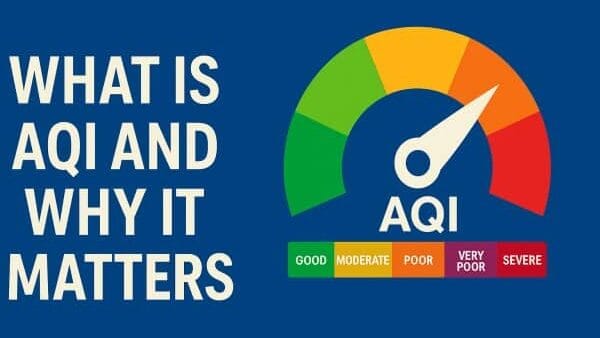
New Delhi, Dec 20, 2025 — As winter smog blankets many Indian cities, the Air Quality Index (AQI) has become a vital tool for understanding pollution levels and their impact on health.
What is AQI?
The Air Quality Index (AQI) is a scale that measures air pollution on a range from 0 to 500. A lower score means cleaner air, while higher scores indicate dangerous pollution. AQI tracks harmful particles and gases such as PM2.5, PM10, ozone, carbon monoxide, sulfur dioxide, and nitrogen dioxide.
🌍 Understanding AQI
The Air Quality Index (AQI) is a standardized scale from 0 to 500 that indicates how clean or polluted the air is. It tracks pollutants such as PM2.5, PM10, ozone, carbon monoxide, sulfur dioxide, and nitrogen dioxide.
📊 AQI Categories
- 0–50: Good — minimal risk
- 51–100: Satisfactory — mild discomfort possible
- 101–200: Moderate — sensitive groups affected
- 201–300: Poor — breathing trouble for many
- 301–400: Very Poor — serious health effects
- 401–500: Severe — emergency conditions
🚨 Why AQI Matters
- Health Impact: High AQI increases risks of asthma, heart disease, and respiratory infections.
- Daily Decisions: AQI guides whether it’s safe to exercise outdoors, send children to school, or commute.
- Policy & Awareness: Governments use AQI data to issue advisories and enforce pollution control measures.
🛡️ Safety Tips During Poor AQI
- Track AQI daily via weather apps or CPCB updates.
- Use N95 masks and indoor air purifiers.
- Avoid outdoor activity when AQI exceeds 200.
- Protect vulnerable groups like children and the old